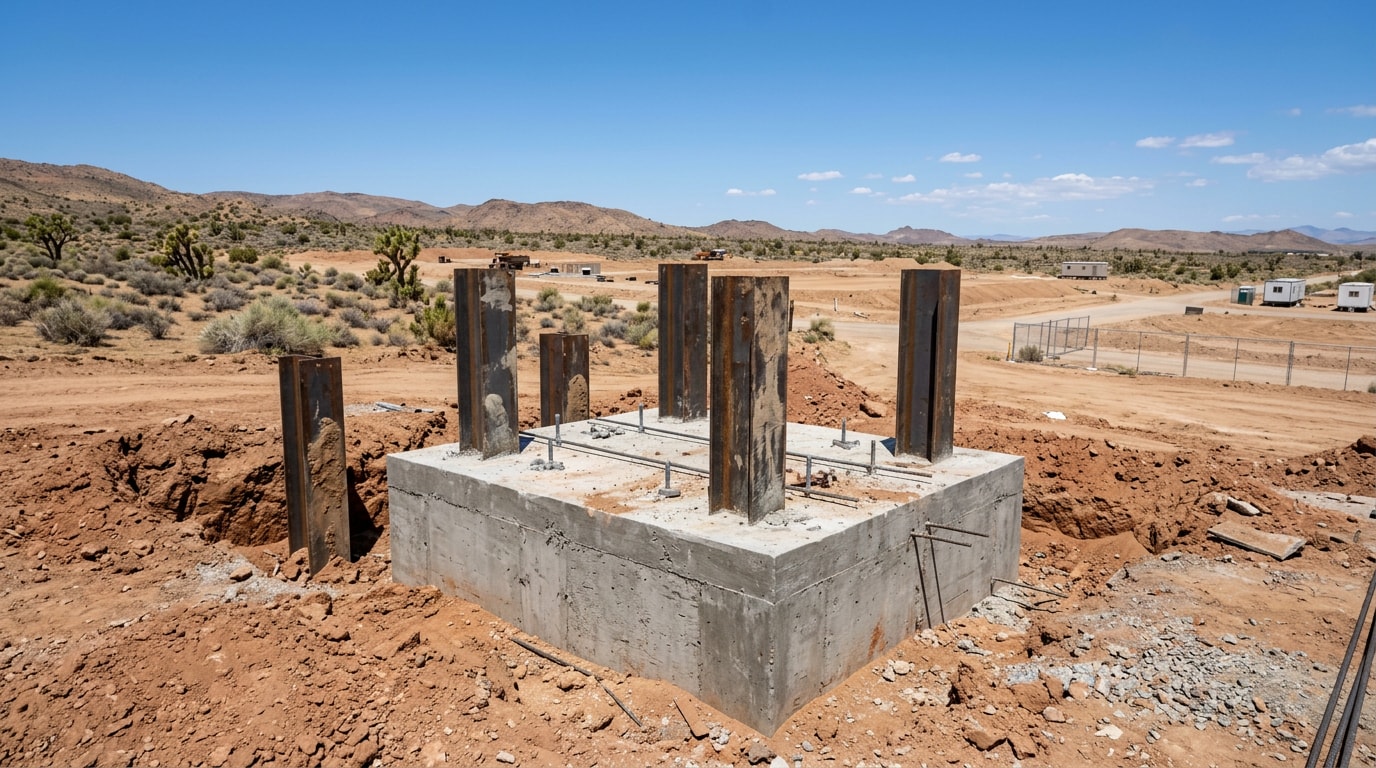
Hiring piling contractors in Riverside County, CA usually starts with one of two problems: a geotechnical report just told you standard footings won't work, or a settling foundation needs underpinning before it gets worse. Either way, you need a crew that holds the right state license, understands this county's alluvial and expansive soils, and can price the job accurately the first time. This guide breaks down the licensing, pile types, real cost ranges, and vetting steps that actually matter here.
What Does a Piling Contractor Do?
A piling contractor installs deep foundation elements, called piles, that carry a structure's weight down through weak surface soil to stronger bearing material below. This matters because a large share of Riverside County sites can't reliably support a standard shallow foundation.
Core duties include pile driving and pressure foundation jacking, running or coordinating geotechnical testing, operating rigs such as diesel hammers and hydraulic impact hammers, and injecting concrete or mortar into foundations to stabilize settling structures. As a general contractor that coordinates foundation subcontractors on remodels and ADU builds across the Inland Empire, we've watched more permit delays come from missing or outdated geotechnical reports than from the actual pile installation. Get the soils report right first, and the rest of the schedule tends to hold.
CSLB License Requirements: C-61/D-30
In California, the C-61/D-30 license is the classification required for pile driving or pressure foundation jacking work where labor and materials exceed $500. That threshold catches nearly every real piling project, residential or commercial.
A pile driving and pressure foundation jacking contractor provides a pile driving and/or caisson drilling or auger service, and this work also includes the injection of concrete or mortar into foundations for stabilization purposes. The license is issued by the Contractors State License Board (CSLB), the state agency that regulates every construction trade in California.
How Contractors Earn a C-61/D-30 License
- At least four years of journeyman-level experience within the last ten years
- A passed business/law exam (no trade exam is required for this classification)
- Minimum age of 18, with a valid driver's license or U.S.-issued ID
- A Social Security number or ITIN, and no active probation or parole
- Fingerprinting, a license bond, and proof of workers' compensation coverage
Before signing anything, ask your contractor to show proof of license, then verify it directly on the CSLB's license lookup tool rather than taking their word for it. For related trades on the same project, our general contractor services page covers the credentials to check before any dirt moves.
Why Riverside County Soil Pushes Projects Toward Deep Foundations
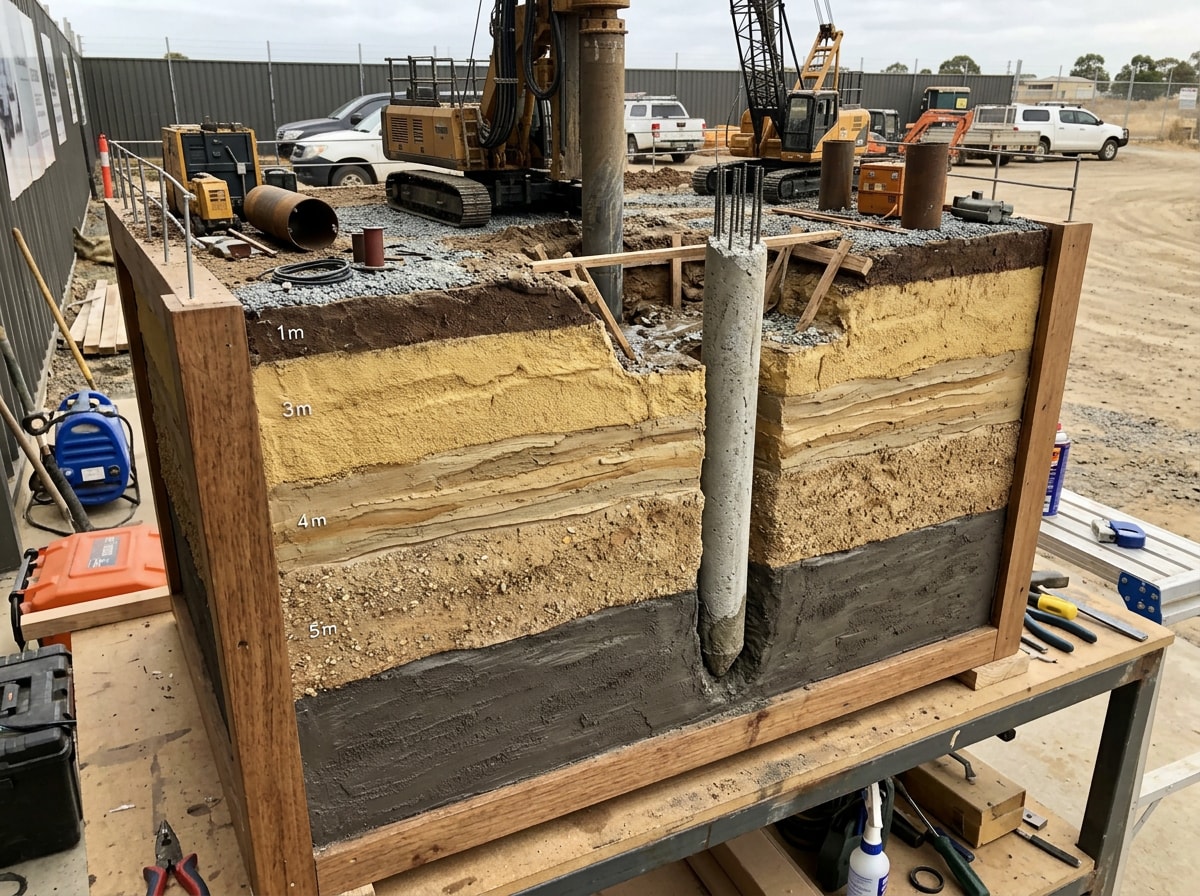
Most directory listings for this keyword skip the actual geology, so here's the part that changes your bid. Much of the City of Riverside sits on alluvial fan deposits shed from the San Bernardino and Box Springs Mountains, ranging from loose sands near the surface to denser gravelly material at depth, which means foundation design has to account for variable density and differential settlement risk. Valley floor and lower terrace areas, by contrast, frequently contain clay-rich soils with moderate to high expansion potential that can damage slabs and foundations if left unmitigated.
On top of that, Riverside County sits near three major fault systems. The county has mapped Alquist-Priolo Earthquake Fault Zones along the Elsinore, San Jacinto, and San Andreas faults, and development within 150 feet of any mapped active fault requires a geologic investigation before permits are issued. That combination of inconsistent bearing soil and seismic exposure is exactly why pile driving and helical systems show up on so many Riverside County foundation plans instead of conventional footings.
Pile Types Compared: Cost and Where Each Fits
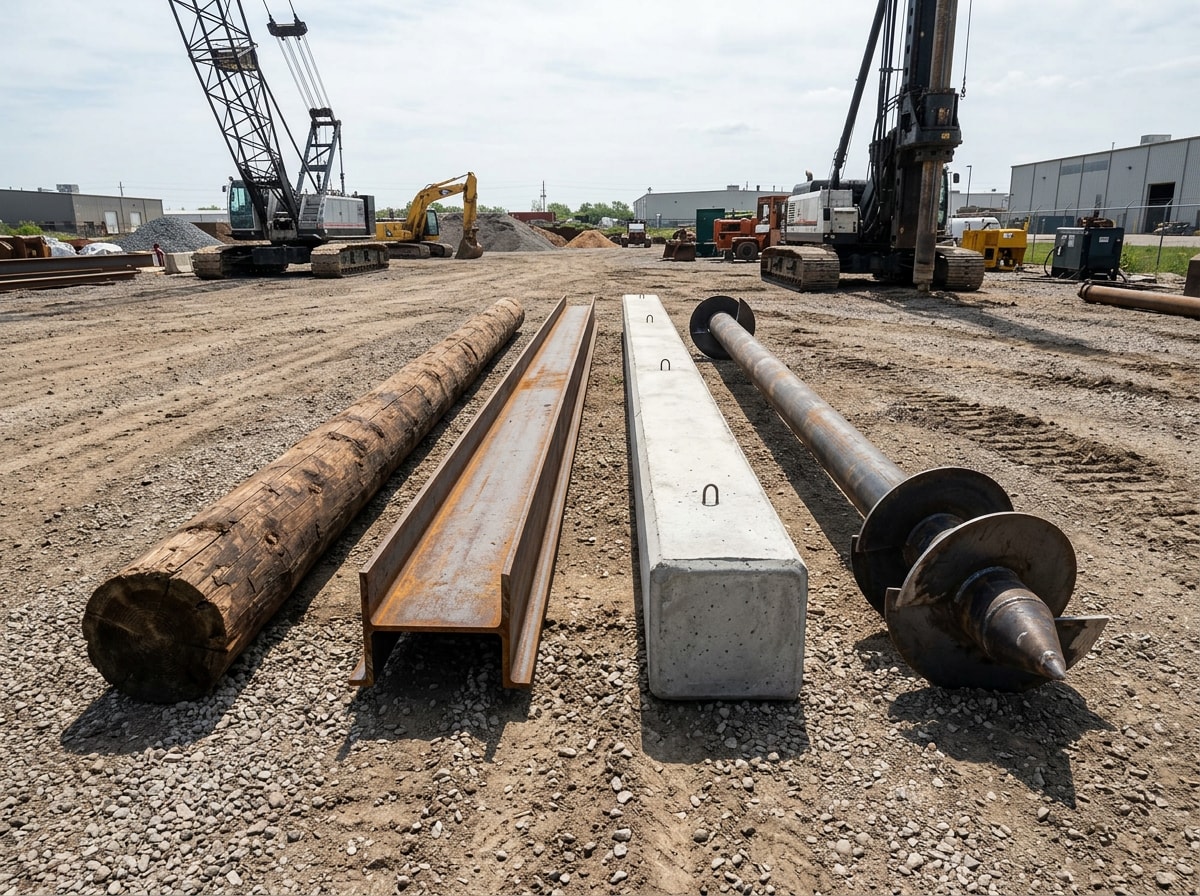
| Pile Type | Typical Installed Cost | Best-Fit Use |
|---|---|---|
| Timber Piles | Lower cost, shorter lifespan | Light structures, temporary support |
| Steel Piles (H-piles, pipe piles) | $50–$150 per linear foot, plus mobilization | Heavy loads, bridges, high-rises |
| Concrete Piles (precast/cast-in-place) | Mid-range | Standard commercial and residential foundations |
| Helical (Screw) Piles, new construction | Roughly $300–$900 per pile | Decks, additions, light structures, tight access |
| Helical Piles, underpinning/repair | Roughly $2,000–$4,000 per pier | Settling foundations, retrofit work near existing structures |
A full residential underpinning job typically runs five to ten piers, which puts most homes in the $15,000–$30,000 range before engineering and permit fees. Driven pile jobs carry their own mobilization cost, often $5,000–$15,000 just to get the rig and crane on site, which is why outlying parts of Riverside County sometimes see higher bids than coastal Southern California for the same spec.
Steel Piles
Steel piles include steel H-piles for deep, heavy-load support, pipe piles (hollow steel cylinders often filled with concrete), and sheet piling used for retaining walls and seawalls. They're common on bridges and high-rise foundations and are installed with impact or vibratory hammers.
Concrete Piles
Precast concrete piles are cast off-site and driven into the ground. Cast-in-place piles are poured directly on-site into a drilled or driven shaft. Both handle substantial vertical loads reliably in Riverside County's clay-heavy valley soils, though cast-in-place options generally adapt better to variable depth-to-bearing conditions.
Helical (Screw) Piles
Helical piles, also called screw piles or helical anchors, suit tight, low-access sites, tieback and anchor work, underpinning, and schedule-driven projects. They install with portable equipment and no concrete curing time, which keeps retrofit jobs moving faster than driven-pile alternatives. Exact load capacity always depends on torque-to-capacity testing performed at install time, not a manufacturer's catalog spec. The Deep Foundations Institute's helical piles and tiebacks program publishes the design guidance most engineers reference when sizing these systems.
If a structural remodel or foundation repair is part of a larger renovation, our structural remodeling and foundation pouring pages outline how that work fits into a full project timeline.
How to Vet a Piling Contractor Before You Hire
Don't hire on price alone. Run through this checklist first:
- Confirm the C-61/D-30 license number directly on the CSLB website, not just on a business card.
- Ask for a current geotechnical report or request one if the site doesn't have one yet; pile specs without soil data are guesses.
- Request references from projects with similar soil conditions, not just any past job.
- Compare at least two bids that itemize mobilization, pile material, and permit coordination separately.
- Check insurance and bonding limits against your project's size, not just that a policy exists.
Get a free estimate once you've narrowed your list to licensed, bonded candidates. It's the fastest way to compare real numbers instead of ballpark guesses.
Finding Piling Contractors Serving Riverside County, CA
Most Riverside County piling specialists bundle related deep foundation work: helical piles, piers, anchors, excavation, shoring, and basement excavation under one contract. Some firms extend that capability across Southern California, covering Riverside, San Diego, Orange, and Los Angeles counties from a single crew.
Locally, that coverage typically includes communities such as Riverside, Moreno Valley, Temecula, and Murrieta. If your project also involves slab work or structural concrete, our industrial concrete contractors guide for Riverside County covers how that trade typically coordinates with a piling crew on commercial sites. For a full list of what we coordinate on general contracting projects, visit our homepage or contact us directly.
FAQ
How much does pile driving cost?
Cost depends heavily on pile type, depth to bearing soil, and site access. Helical piles for new construction typically run $300–$900 per pile, while underpinning work with helical piers runs $2,000–$4,000 per pier. Driven steel and concrete piles run $50–$150 per linear foot installed, plus $5,000–$15,000 in rig mobilization. Use these as a starting baseline, then get a site-specific quote since Riverside County's soil variability swings pricing in both directions.
Do you need a permit for pile driving in California?
Yes. Beyond the CSLB's $500 labor-and-materials licensing threshold, Riverside County and individual cities each require their own building permits before piling work begins. Building permits in unincorporated Riverside County are issued by the Department of Building & Safety within the Transportation and Land Management Agency, with applications filed through the PLUS Online portal. Cities within the county, including the City of Riverside, run their own separate permitting process, so confirm jurisdiction before you apply.
What is the difference between helical piles and driven piles?
Helical piles are screwed into the ground with minimal vibration and disturbance, making them well-suited to sites near existing structures or where neighbors are sensitive to noise. Driven piles are hammered in, which moves faster on large open sites but creates more ground vibration and noise during installation.
How deep do piles need to go in Riverside County?
It varies by site. Valley-floor properties with clay-rich expansive soil, or sites on younger alluvial fan deposits, often need piles to reach stable bearing material well below the zone affected by seasonal moisture swings. Your geotechnical report, not a general rule of thumb, should set the final depth. Properties near mapped fault zones may also require additional setback and investigation before a depth is approved.
What is piling?
Piling is the process of driving or installing deep foundation elements into the ground to transfer a structure's load to stronger, deeper soil or bedrock when surface soil can't support a standard footing.
How long does a pile driving project take?
Residential projects often take a few days to a couple of weeks for the actual installation; commercial jobs can run several weeks to months. In practice, mobilization and permitting usually take longer than the driving itself, which is another reason to confirm your contractor's permit experience in your specific jurisdiction before signing.