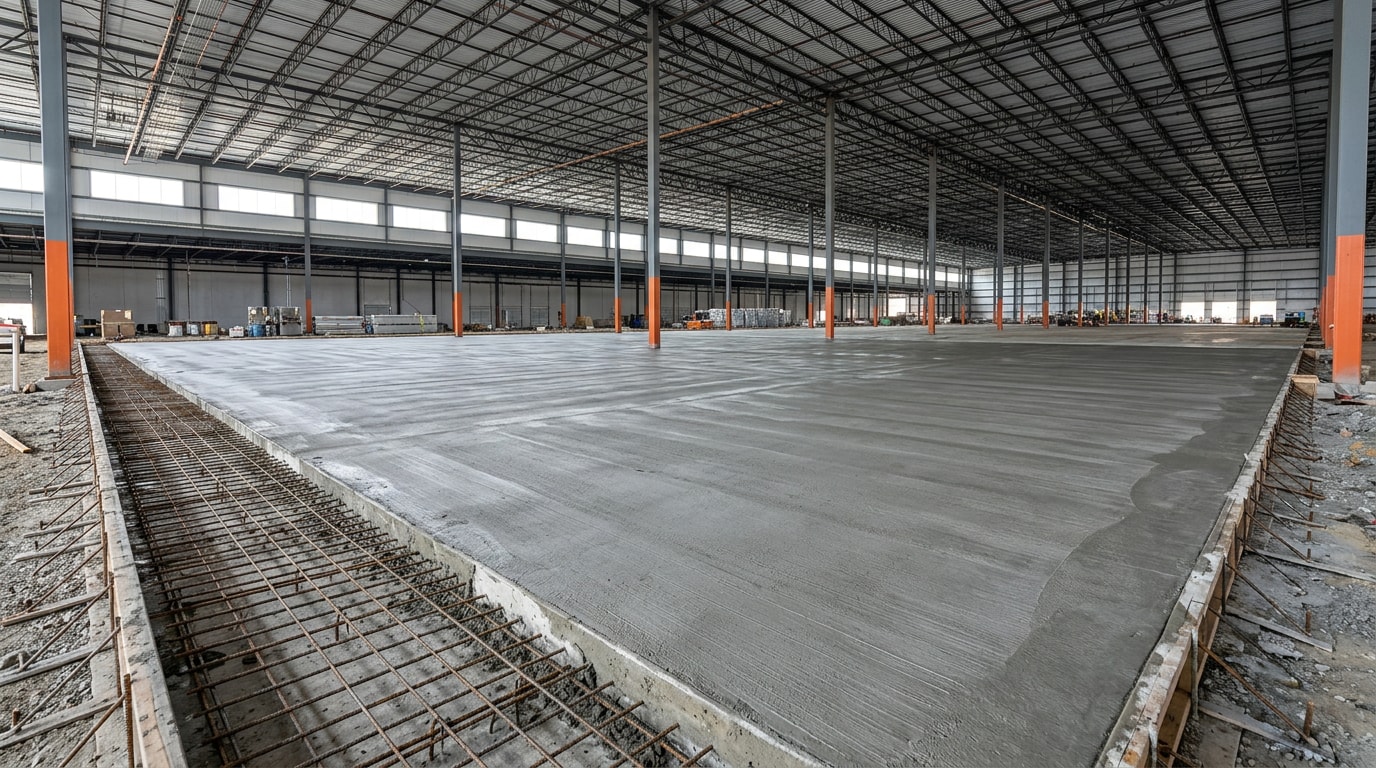
Hiring industrial concrete contractors in Riverside County, CA means vetting more than a crew with a mixer truck and a handful of driveway photos. Industrial slabs, machine foundations, and heavy-load flatwork carry engineering requirements that residential crews rarely touch. This guide breaks down licensing, slab specs, costs, and permitting so you can compare bids with confidence before a shovel hits dirt.
What Makes a Contractor Qualified for Industrial Concrete Work
Industrial concrete is a different trade than a patio pour. A slab carrying forklift traffic, racking loads, or vibrating machinery has to be designed, not just poured, and that design has to hold up under load for decades.
Licensed, Bonded & Insured in California
A legitimate concrete contractor in California holds an active C-8 classification from the Contractors State License Board (CSLB), carries a surety bond, and maintains liability insurance sized for the project. Before signing anything, verify the license number directly through the CSLB's official license lookup tool and confirm the bond and insurance are both current.
On a recent machine-base pour, our crew brought in a structural engineer to confirm rebar spacing before placement. Skipping that step is a common shortcut on industrial jobs, and it's how an undersized base ends up cracking under vibration load within months instead of lasting decades.
Safety Compliance on Industrial Sites
Industrial pours involve formwork, post-tensioning, and heavy equipment that residential crews don't handle daily. Contractors working on these sites need to follow OSHA's Subpart Q standards for concrete and masonry construction, which cover everything from formwork loading to reinforcing-steel impalement hazards. Ask any bidder how they train crews on these requirements before you let them on site.
Commercial vs. Industrial Concrete: Know the Difference
Property owners often use these terms interchangeably, but the design requirements aren't close. Mixing them up during bidding is one of the fastest ways to end up with an underbuilt slab.
| Factor | Commercial Concrete | Industrial Concrete |
|---|---|---|
| Typical use | Retail slabs, parking lots, office foundations | Warehouse floors, machine pads, manufacturing slabs |
| Foot/vehicle traffic | Pedestrians, occasional light vehicles | Forklifts, pallet jacks, heavy equipment |
| Typical slab thickness | 4–5 inches | 6 inches or more, often 8+ for heavy machinery |
| Reinforcement | Standard wire mesh or light rebar | Heavier rebar grids, sometimes post-tensioned |
| Design input | Contractor-specified | Structural engineer-specified |
Light industrial slabs commonly run thinner than heavy-duty applications, while continuous forklift traffic or stationary machinery usually calls for thicker, more heavily reinforced sections. The American Concrete Institute's guide to concrete floor and slab construction covers how thickness, joint layout, and surface tolerance interact, but final numbers should always come from a project-specific engineering review, not a rule of thumb.
Industrial Concrete Services in Riverside County
As an industrial concrete contractor, our scope covers the full range of heavy-load work, not just flatwork.
- Slabs on grade
- Machine base foundations and equipment pads
- Structural concrete, including formwork
- Surface hardening and dust-proofing
- Retaining walls
- Site concrete and spread footings
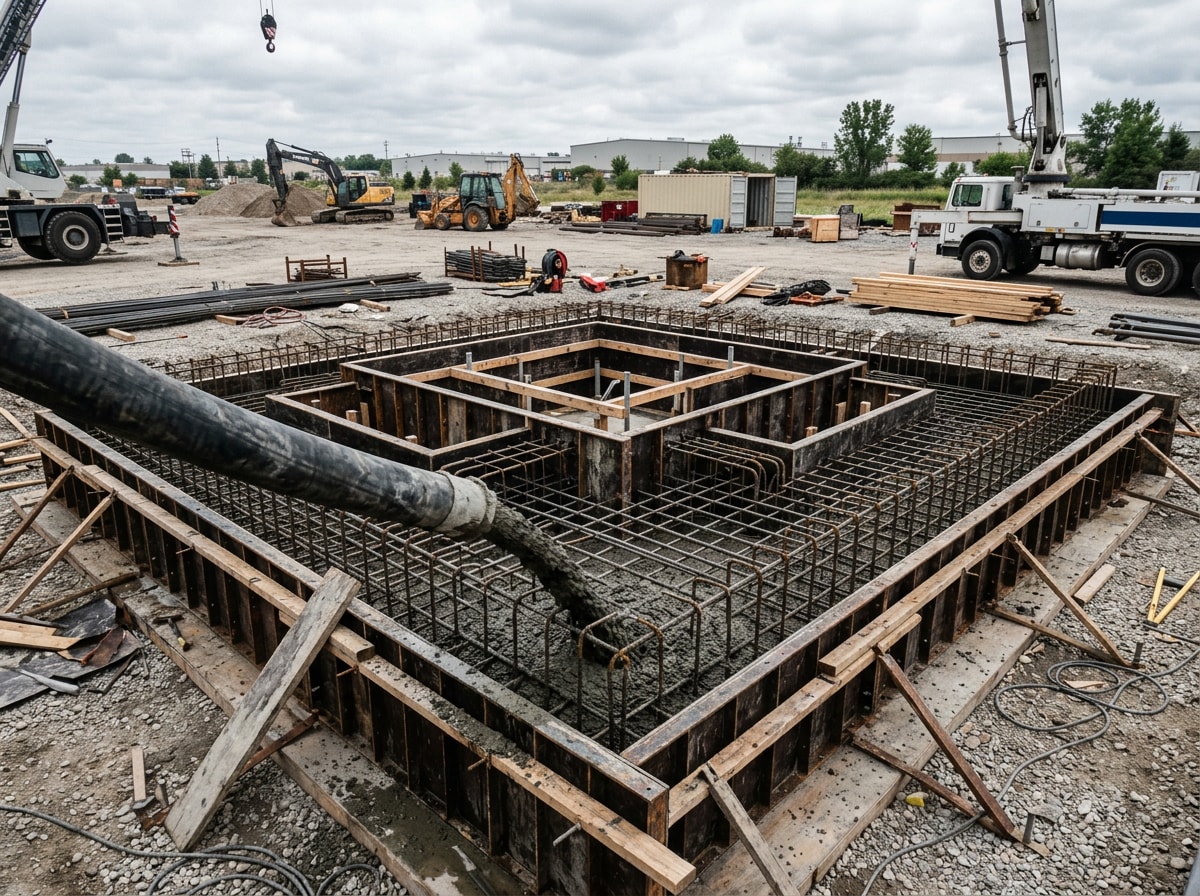
See our general contractor services for the full project breakdown, or go straight to foundation pouring if that's the scope you're quoting.
Industries We Serve
Different industries bring different load, chemical exposure, and code requirements, and that shapes how a slab gets designed and poured.
- Manufacturing facilities — heavy equipment loads, vibration resistance
- Refineries — chemical and temperature exposure
- Water treatment plants — moisture resistance, specific joint detailing
- Distribution and logistics centers — high forklift traffic, floor flatness tolerances
Commercial Concrete Services in Riverside County
Commercial concrete covers the flatwork, flooring, and foundations that keep Riverside County businesses running day to day. Two areas come up most often with commercial clients.
Commercial Concrete Flooring
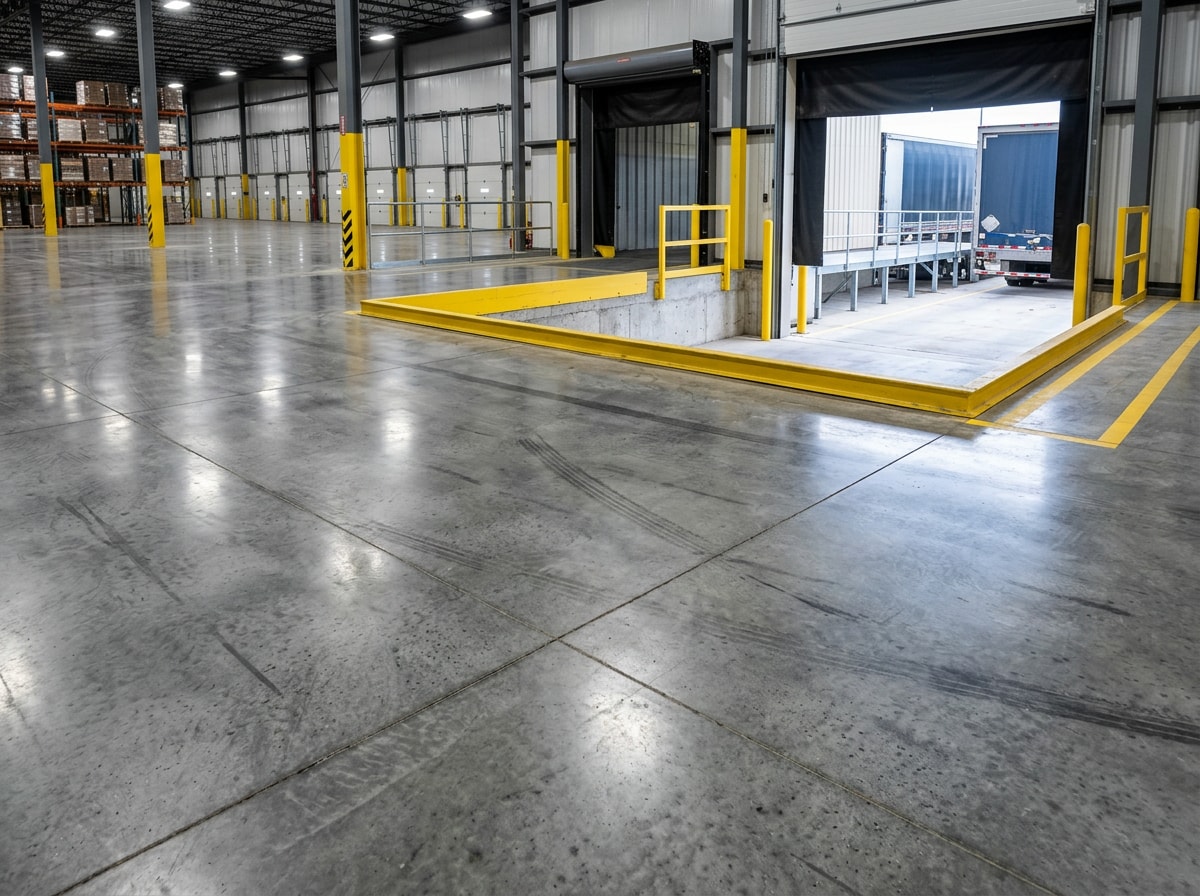
Commercial flooring built for warehouse or retail use needs enough reinforcement and finish durability to handle constant foot and equipment traffic without spalling or cracking prematurely.
Commercial Concrete Foundations
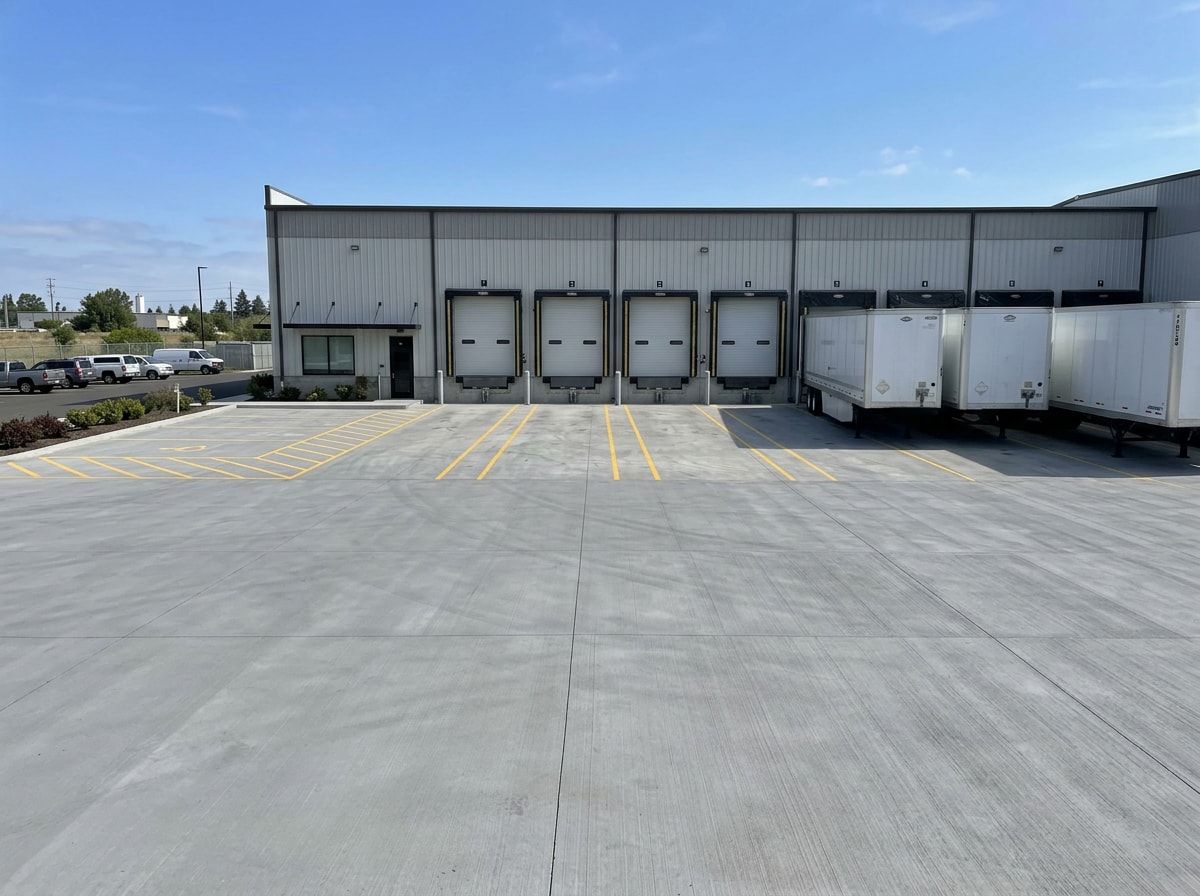
A commercial foundation supports everything built above it, so a poorly placed base affects long-term structural stability. Any foundation work tied to public-facing commercial space also needs to account for accessible routes and ramp slopes under the ADA's 2010 Standards for Accessible Design, so loop in your contractor early if the project includes customer or employee access points.
Concrete Repair and Restoration
Damaged concrete isn't just a cosmetic problem. Cracks and spalling expose rebar to moisture, which accelerates corrosion and weakens the slab further. Our repair scope includes crack injection, surface resurfacing, and full-panel restoration for commercial and industrial sites. If the damage extends into structural elements rather than just the slab surface, that work falls under interior structural repairs.
What Industrial Concrete Costs in Riverside County
Industrial concrete pricing swings with slab thickness, reinforcement, site access, and how much prep work the subgrade needs before a pour. A few factors that move the number the most:
- Slab thickness and reinforcement — thicker, heavier-rebar slabs cost more per square foot than standard flatwork.
- Site preparation — poor soil conditions, grading, or demolition of existing concrete adds cost before the pour even starts.
- Access and logistics — tight industrial sites with limited crane or pump-truck access raise labor costs.
- Finish requirements — surface hardeners, specific flatness tolerances, or chemical-resistant coatings add to the base price.
Treat any per-square-foot figure you see online as a rough planning range, not a quote. Request a site-specific estimate once a scope and load requirement are defined.
Permits and Code Requirements for Industrial Concrete
Most structural and industrial pours in Riverside County need a building permit before work starts. Riverside County's Building and Safety Department handles plan review, permit issuance, and inspections as part of the county's land-use process, and larger industrial pours typically also trigger a grading permit if the site needs earthwork first. A reputable contractor should handle the permit application on your behalf, including coordinating any required soils report or structural calculations.
We serve properties throughout the county, including Riverside, Corona, Moreno Valley, Murrieta, and Temecula. If you're planning new construction rather than a standalone concrete scope, our new construction and waterproofing services cover the rest of the build.
How to Choose an Industrial Concrete Contractor
Before you sign a contract, run through this checklist:
- Confirm an active C-8 license through the CSLB lookup tool.
- Ask for industrial-specific project references, not just residential driveways.
- Verify bond and liability insurance amounts match your project size.
- Confirm they'll bring in a structural engineer for load-bearing designs.
- Ask how they handle permitting and inspections with the county.
- Get a written scope that specifies slab thickness, reinforcement, and finish.
If you want a deeper look at how new builds get scoped and scheduled in this county, our New Home Builder in Riverside County, CA guide walks through the full process.
Ready to get a quote scoped to your slab, not a generic estimate? Get a free estimate from our team, or visit the homepage to see our full service lineup.
FAQ
How do I choose an industrial concrete contractor?
Confirm an active C-8 license, ask for industrial-specific project references, and check that the contractor can coordinate structural engineers and county inspections on larger sites. A contractor who can't name a recent industrial project isn't the right fit for a machine foundation or warehouse slab.
How much do industrial concrete contractors charge?
Cost depends on slab thickness, reinforcement, site prep, and access. There's no reliable flat rate for industrial work since every site has different load and soil conditions. Request a site-specific quote once your engineer or contractor has defined the scope.
Do I need a permit for concrete work in Riverside County?
Most structural and industrial pours need a building permit from Riverside County's Building and Safety Department. A small, non-structural slab like a short walkway may be exempt, but anything supporting a structure or heavy equipment almost always requires a permit and, often, a grading permit for site prep.
What's the difference between commercial and industrial concrete?
Commercial concrete covers retail, office, and parking applications with lighter traffic loads. Industrial concrete handles forklifts, racking, and heavy machinery, which means thicker slabs, heavier reinforcement, and engineer-specified designs rather than standard contractor specs.
How thick does an industrial concrete slab need to be?
It depends on the load. Light industrial use often works with slabs in the 5–6 inch range, while forklift traffic and heavy machinery typically call for 8 inches or more with reinforced steel. A structural engineer should confirm the exact thickness based on your equipment loads and subgrade conditions rather than relying on a generic number.
Do industrial concrete contractors handle permits for me?
Most established contractors manage the permit application, submit required plans, and coordinate inspections with the county on your behalf. Confirm this is included in your contract before work starts, since some smaller crews expect the property owner to handle permitting directly.