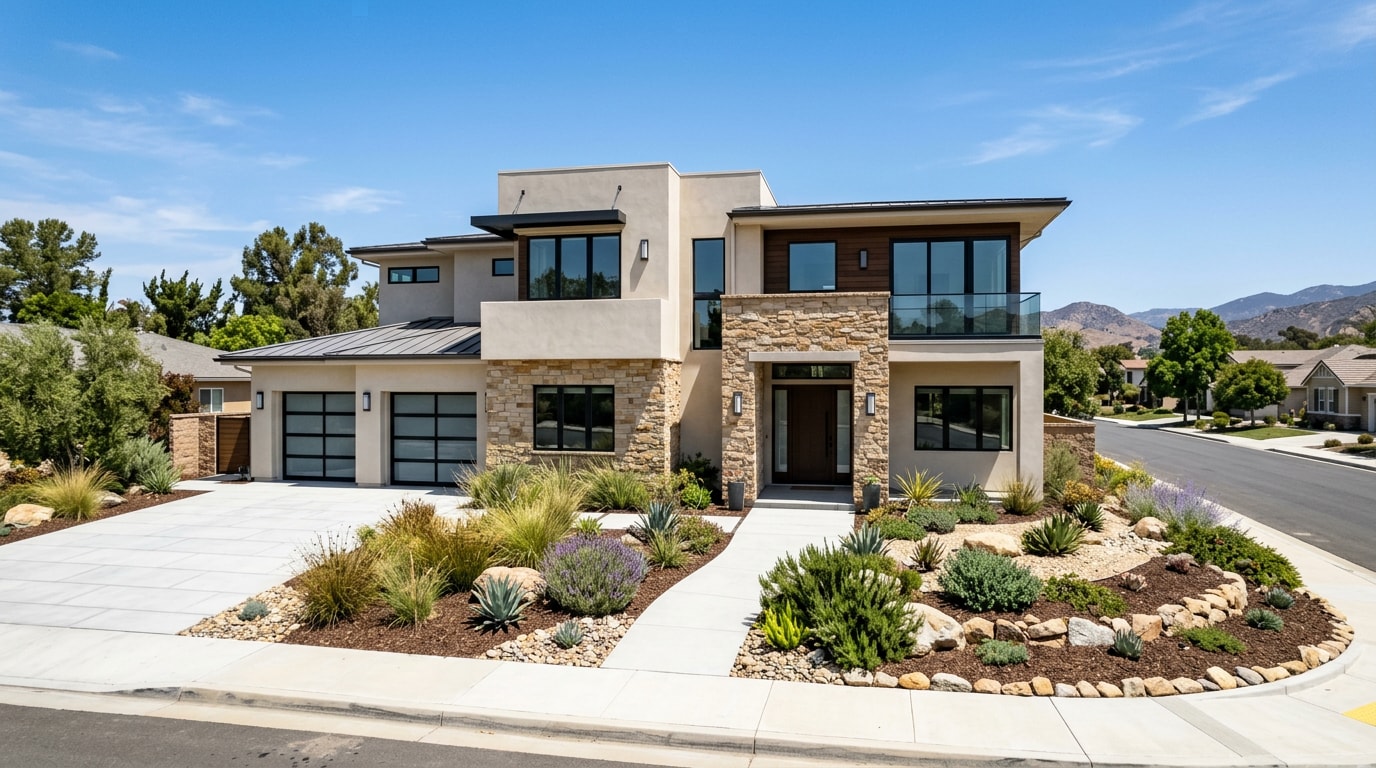
Choosing from the many new home contractors Los Angeles County, CA has to offer is one of the highest-stakes decisions a homeowner makes. The right choice saves you money and months of headaches. The wrong one can cost both, plus a construction dispute you never signed up for.
Why Hiring the Right New Home Contractor in Los Angeles County Matters
A single bad hire can trigger cost overruns, stalled permits, and workmanship disputes that drag on for years. Los Angeles County's patchwork of zoning rules, seismic codes, and hillside restrictions makes this riskier than hiring a general contractor in a simpler market.
A qualified custom home builder understands these local layers before ground ever breaks. The credential checks below give you a framework for vetting anyone you're considering.
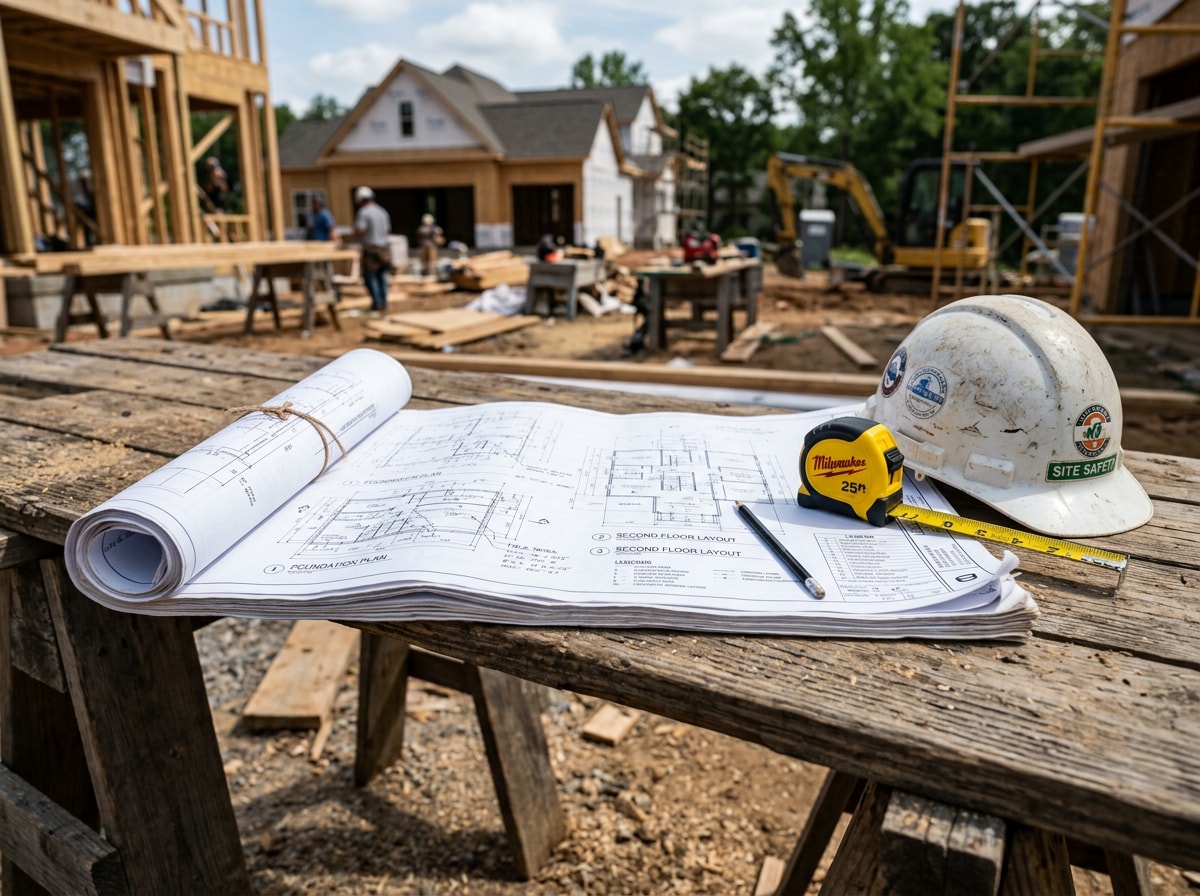
Explore our new home construction services to see how a full-service team handles these requirements from day one.
Proven Experience, Licensing, Insurance & Legal Compliance
Verify that any candidate holds an active, appropriately classified license, carries both general liability and workers' compensation insurance, and has handled projects specific to LA's coastal, hillside, or seismic zones. Generic residential experience elsewhere doesn't guarantee familiarity with LADBS requirements or local HOA restrictions.
Start with licensing. A licensed contractor should hold a current CSLB license in the correct classification for your project type. Don't take their word for it, verify it yourself:
- Visit the California Contractors State License Board's online lookup tool.
- Enter the license number or business name.
- Confirm the status reads "active," not "expired" or "suspended."
A California contractor license lookup takes about two minutes on the Contractors State License Board website, and the free public tool shows the license status, classification, expiration date, bond, workers' compensation insurance, and any disciplinary actions. That short check tells you more than a sales pitch ever will. The CSLB license lookup tool is free and public.
Bonded and insured status matters just as much. Ask for a certificate of insurance naming you (or your project address) and confirm workers' comp coverage directly with the insurer on larger projects. A contractor without current bonding is a contractor you walk away from, no matter how good the estimate looks.
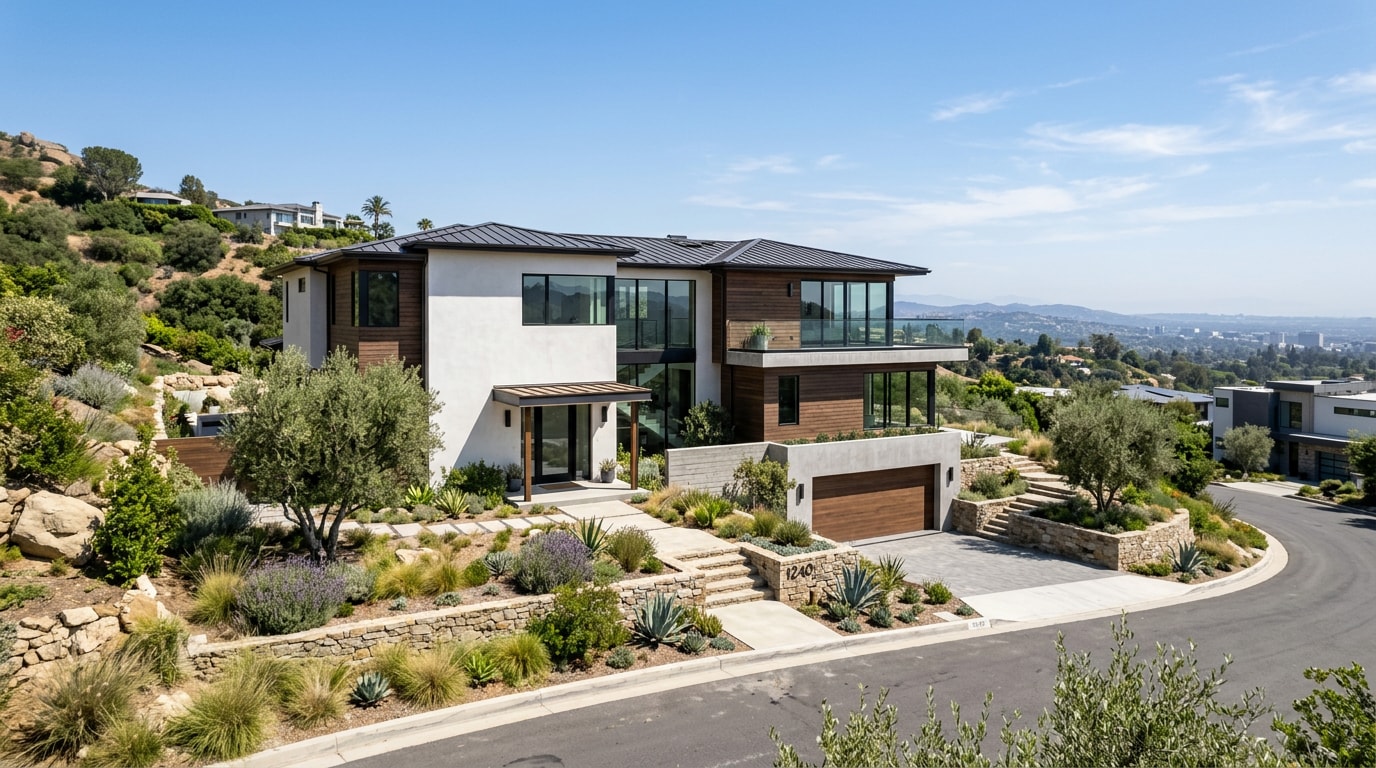
In our own hillside projects across the Santa Monica Mountains and San Gabriel foothills, geotechnical and grading review alone has routinely added several extra weeks beyond a standard plan check timeline. That's the kind of local friction a generic license search won't reveal, but a contractor's recent project history will.
Communication, Reliability & Red Flags to Avoid
Good contractor communication looks like scheduled check-ins, a single point of contact for project management, written milestone updates, and a documented process for change orders before scope changes. You shouldn't have to chase anyone for basic status updates.
Watch for these reliability red flags early:
- Missed appointments or slow callbacks
- Vague answers about timelines or scope
- Reluctance to put pricing or scope in writing
- Pressure to sign before you've seen a detailed estimate
A contractor who won't commit to specifics on paper rarely commits to specifics on-site either.
What Services Do New Home Contractors in Los Angeles County Offer?
Full-service new home construction typically spans design consultation, permitting support, ground-up building, and major additions. Some firms specialize narrowly. A residential construction company built for custom homes may not be the right fit for a smaller addition project, and vice versa.
Many homeowners building new also add or convert space elsewhere on the lot, whether that's a structural remodel tied into the new build or a separate accessory dwelling unit for rental income or multigenerational living.
New Home Construction and Room Additions
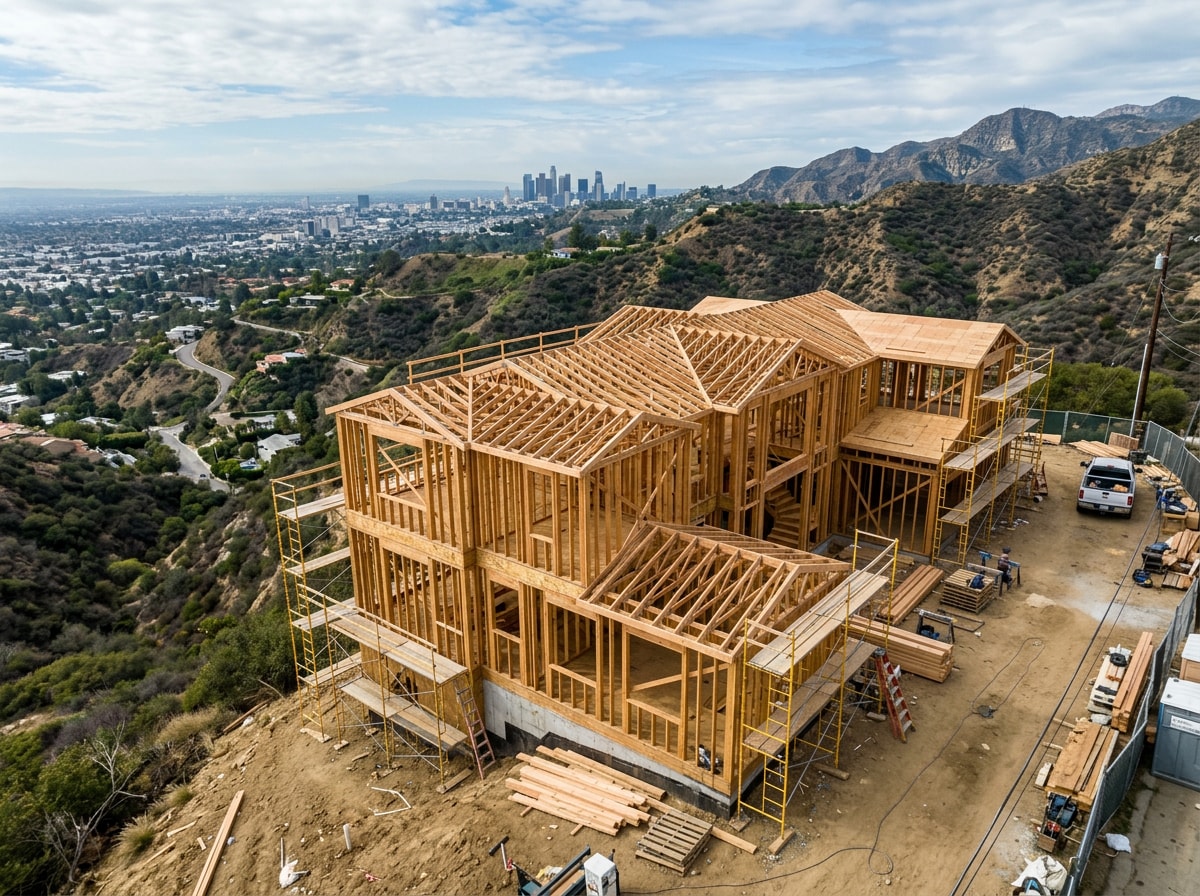
Ground-up build projects start from raw land or a teardown and involve the full permitting, design, and construction cycle from foundation to final inspection. Room additions, by contrast, build onto an existing structure through a home renovation scope and often trigger a different, sometimes simpler, permitting path, though additions in hillside or seismic zones can still get complicated fast.
Contractors who specialize in new home construction don't always handle additions well, since the two require different sequencing and subcontractor relationships. Ask directly which category represents the bulk of a firm's recent work before assuming they can do both equally well.
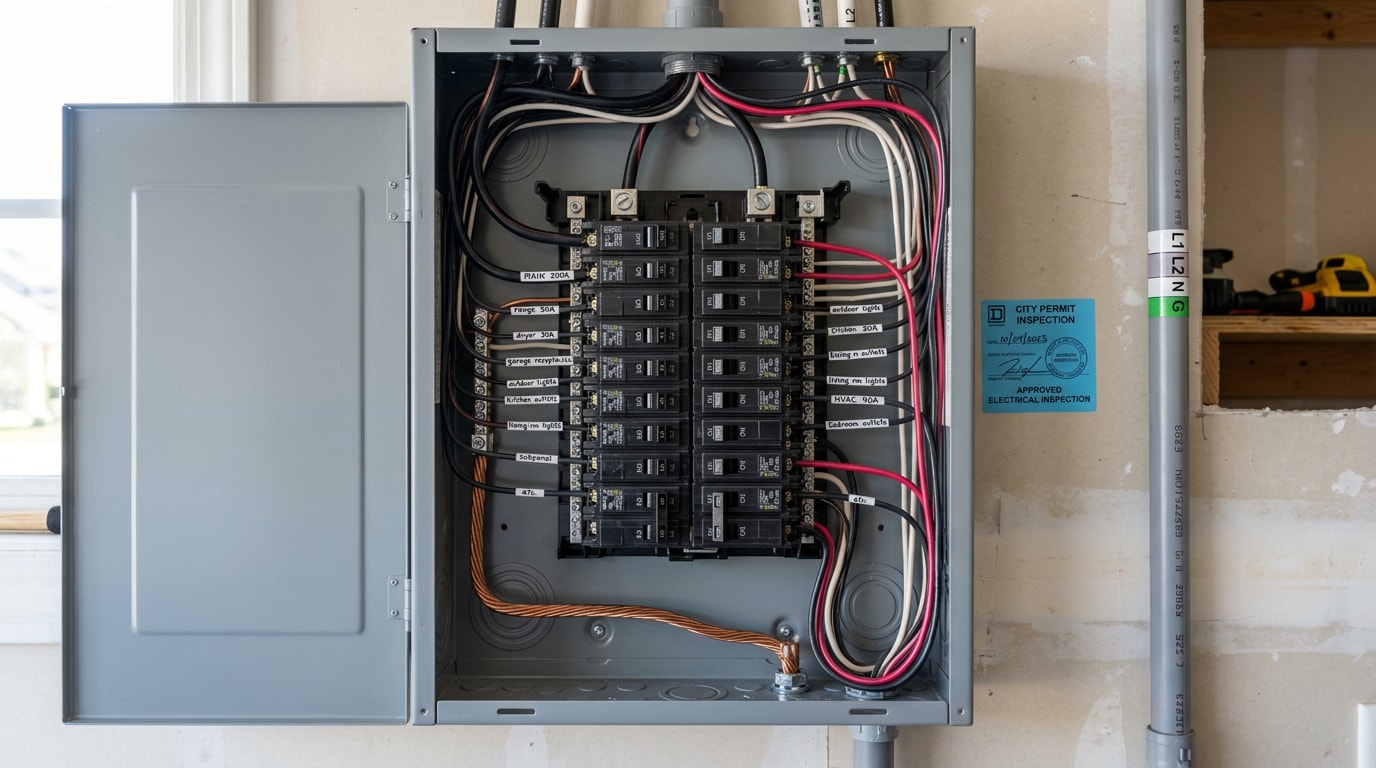
Scope questions also come up around trade work. If you're wondering whether your general contractor can handle electrical upgrades in-house or needs to bring in a licensed electrician, our guide on whether a general contractor can do electrical work breaks down how that scope typically gets divided.
Browse our general contractor services for a full breakdown of project types we handle across the county.
Step-by-Step: How to Hire the Best General Contractor in Los Angeles County
Once you've confirmed licensing and communication standards, two more steps separate a safe hire from a risky one:
- Request a detailed, itemized estimate. Ask for costs broken down by labor, materials, permits, and design fees, not a vague lump sum. A scope-specific estimate protects you if disputes arise later, because it defines exactly what you paid for.
- Review local project experience directly. Ask to see two or three recently completed jobs in your specific neighborhood or a comparable jurisdiction within the county. A contractor with real local experience will know your area's typical plan-check turnaround and common inspection hang-ups before you even ask.
These two steps work alongside the credentialing checks above, don't skip either one just because licensing checked out.
Request a free estimate to compare scope and pricing before you commit to a contractor.
Timeline & Local Codes: What to Expect When Building in Los Angeles County
Permitting and code enforcement vary meaningfully even within Los Angeles County, and that variation drives your actual construction timeline more than almost anything else. A project in a hillside overlay zone moves at a different pace than one on a flat-lot suburban tract, purely because of LADBS permitting layers.
Permits, Zoning & Local Regulations
Building permits are required for new constructions, additions, alterations, and demolition or removal of a building or structure throughout the City of Los Angeles, and unincorporated county areas follow comparable rules through LA County Public Works. Hillside lots face additional geotechnical and grading review on top of standard plan check.
Plan check timelines depend heavily on project type and complexity. Most plan checks take four to twelve weeks for a residential ADU, and new construction typically runs longer. Permit fees scale with project valuation and can add a meaningful percentage to your overall budget, so ask your contractor for a fee estimate during the bidding stage rather than after the fact. You can review current plan review and permitting services directly through the LADBS website.
Title 24 compliance, California's energy code, applies to nearly all new residential construction and affects insulation, window specs, and HVAC choices. Title 24 is a section of the California Code of Regulations that governs the energy efficiency standards for residential and non-residential buildings. Zoning and floor-area-ratio limits cap how much buildable square footage your lot allows, which matters enormously for hillside parcels with smaller buildable envelopes. For current standards, consult the California Energy Commission's Title 24 building energy efficiency standards directly, since requirements update on a regular cycle.
How Much Does It Cost to Build a New Home in Los Angeles County?
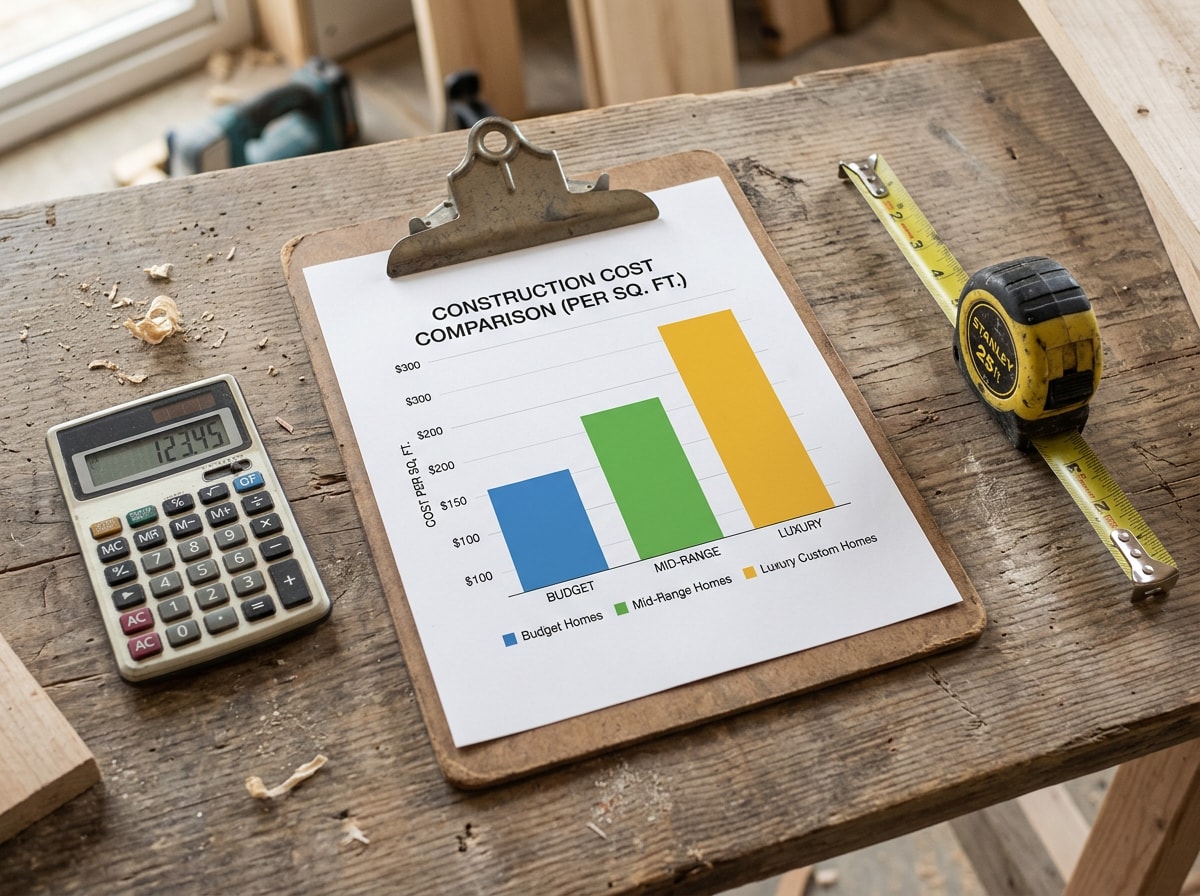
Construction cost per square foot in LA County runs well above the national average, driven by labor rates, permitting complexity, and land conditions. Before comparing bids, it helps to understand the framework contractors use to build their numbers.
Cost Per Square Foot & What Affects It
| Tier | Approx. $/sq ft (2026) | Typical finishes |
|---|---|---|
| Budget | $300–$400 | Standard materials, simpler design |
| Mid-range | $400–$600 | Upgraded finishes, moderate custom detail |
| Luxury | $600–$900+ | High-end materials, complex design, custom features |
For context on how far LA County pricing sits above the rest of the country, the national average construction cost for a single-family home reached about $162 per square foot in 2024, the highest in the history of the NAHB's cost survey series.
Construction costs accounted for 64.4% of the average sales price of a new home in 2024, up from 60.8% in 2022. You can review the full breakdown in NAHB's Cost of Constructing a Home survey. LA County's labor rates and regulatory layers push local per-square-foot costs well past that national baseline.
Material choices, design complexity, and lot conditions push costs within and beyond the ranges above. A hillside lot requiring retaining walls or extensive grading can add tens of thousands before framing even starts. Custom window packages, imported stone, or complex rooflines push material costs up fast too.
This is why you should compare contractor bids on value, not headline price alone. A lower bid that excludes permit fees, site prep, or fixture allowances isn't actually cheaper, it just defers the cost until a change order lands later. Ask every bidder for the same scope breakdown so you're comparing apples to apples.
How to Keep Your Construction Project on Time and Budget
Cost drivers matter less if you manage the budget poorly once construction starts. A few disciplined habits early on prevent most of the overruns homeowners complain about later.
Set a Realistic Budget & Get Multiple Bids
Build your full budget before signing anything:
- Labor, materials, permits, and design fees
- A contingency fund of 10 to 20 percent for the surprises that hillside lots and older properties tend to produce
- Collect three to five bids before committing
Skipping the contingency fund is the single most common reason projects stall mid-build. Comparing multiple bids side by side surfaces outliers, whether suspiciously low or inflated, and gives you leverage to ask pointed questions about scope differences. A realistic budget paired with real competition among bidders is still the most reliable way to avoid both overpaying and underbudgeting.
Los Angeles County Service Areas
New home contractors across LA County typically cover a wide range of jurisdictions, each with its own permitting quirks. Westside and coastal communities often carry added coastal commission review. The San Fernando Valley sees high demand for ground-up builds on larger flat lots. The greater LA core moves faster on standard permits, and foothill or hillside communities face the most geotechnical and grading scrutiny.
Local contractor coverage matters because a firm experienced in one jurisdiction may be unfamiliar with another's plan-check quirks. Confirm your contractor has recent, direct experience in your exact city or neighborhood, not just "Los Angeles County" broadly. We also serve nearby Riverside County and Orange County if your project spans multiple jurisdictions.
FAQ
How much does it cost to build a home in Los Angeles County?
Costs generally range from around $300 per square foot for budget builds to $900 or more per square foot for luxury custom homes, as detailed in the cost breakdown above. Lot conditions, design complexity, and material choices shift these numbers significantly, so always request a project-specific estimate rather than relying on a general average.
How long does it take to build a custom home in Los Angeles?
Most custom home projects take 12 to 24 months total, factoring in design, LADBS permitting, and construction phases. Hillside lots, coastal review zones, or complex designs can extend this timeline further, so build in buffer time when planning your move-in date.
Do I need a permit to build a new home in Los Angeles County?
Yes, virtually all new home construction in the county requires LADBS permits before work begins. Building without one risks stop-work orders, fines, and serious complications at resale or with insurance claims if problems surface later, since unpermitted work often isn't covered.
How do I verify a contractor's license in California?
Use the CSLB's free online license lookup tool, search by license number or business name, and confirm the status reads active with current bonding. This same verification process is covered in more detail in the credentials section above.
What's the difference between a general contractor and a custom home builder?
A general contractor manages a broad range of residential projects, from additions to renovations to new builds. A custom home builder typically focuses specifically on ground-up construction and design-build work. Many firms do both, so ask directly how much of their recent portfolio is new construction versus remodeling.
How are general contractor fees structured in Los Angeles County?
Most contractors build their fee into the overall project bid rather than quoting a flat percentage upfront. Ask for a line-item breakdown that separates labor, materials, permits, and overhead so you can see exactly what you're paying for and compare bids accurately.
Ready to start? Get a free estimate or visit the DQB Team homepage to see our full range of general contractor and ADU services across Los Angeles County.