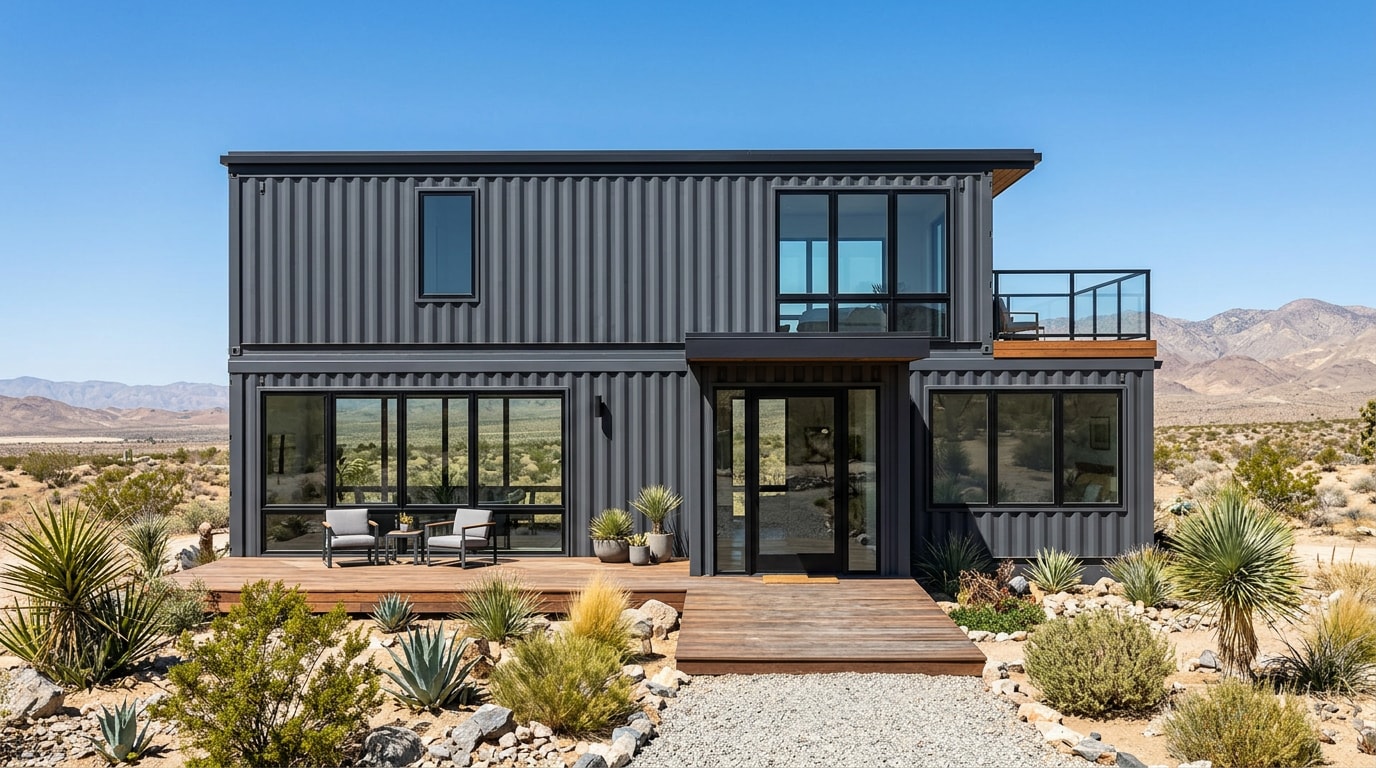
Shipping container home builders in Riverside County, CA work under a zoning system most national guides get wrong: the county regulates storage containers and livable container homes under two completely different ordinance chapters. Get that distinction wrong and your project stalls at the permit counter, not on the job site. This guide breaks down real 2026 costs, the exact zoning rule your build falls under, and how to vet a contractor who has actually pulled a permit for one of these.
Need a scope and number before you buy a container? Get a free estimate from a licensed local crew first.
How Much Does a Shipping Container Home Cost in Riverside County?
Pricing breaks into two pieces: the raw container shell, and the full build-out with insulation, utilities, and finishes. Most buyers underestimate the second number.
| Item | Typical Cost |
|---|---|
| 20ft container (shell only) | $2,500–$5,000 |
| 40ft container (shell only) | $4,500–$8,500 |
| Delivery to site | $500–$1,500 |
| Full finished build (per container) | $40,000–$90,000+ |
A home combining three or more containers typically lands between $150,000 and $300,000 once you add site work, plumbing, HVAC, and permitting. That range is wide because container count, custom window and door cutouts, and site accessibility all swing the final number.
Labor matters more here than in standard construction. Cutting and reinforcing steel without proper engineering weakens the container's structural integrity, so specialized retrofit labor in Riverside County typically runs higher per hour than general framing work. Homeowners who hire an experienced contractor instead of self-managing the build usually pay more upfront but avoid the failed-inspection rework that eats into any DIY savings.
Is a Shipping Container Home Legal in Riverside County? The Zoning Split Nobody Explains
This is where most articles about container homes get it wrong, and where your project can get stuck for months if you don't catch it first.
Riverside County's zoning code treats shipping containers two completely different ways depending on what you're using them for.
Metal shipping containers as accessory structures. Under the county's storage-container rules, metal shipping containers shall not be allowed as a principal use in any zone, and shall be an accessory use for storage and shall not be used for habitable space. If you're using a container as a tool shed or storage unit on a residential lot, the count you're allowed depends on acreage. No more than one metal shipping container is allowed on lots one gross acre or greater but less than two gross acres, no more than two containers on lots two to five gross acres, and no more than three containers on lots five to ten gross acres.
Residential shipping containers as a livable home. This is a separate chapter, and it's the one that actually applies if you're building a home. The county defines a residential shipping container as a dwelling made from a steel shipping container, adapted from either a twenty-foot by eight-foot or forty-foot by eight-foot container with a height of either eight and one-half feet or nine and one-half feet, for permanent year-round occupancy by one household with functional areas that support normal daily routines including cooking, sleeping and sanitation. Under this chapter, tiny homes and residential shipping containers are allowed as a use by right in the R-7 and MU zone classifications, as well as in all zoning classifications that permit one-family dwellings or accessory dwelling units.
In plain terms: a storage container on a rural lot and a container converted into a house are not regulated the same way, and confusing the two is the single most common reason homeowners get bad information from a contractor who hasn't pulled a container-home permit here before. You can review the full text in Riverside County's current zoning ordinance before you buy land or sign a contract.
Every residential container build, regardless of zone, still needs engineered structural plans, a standard building permit, and Title 24 energy compliance. The state's 2025 energy standards cycle took effect recently, so projects permitted now fall under updated requirements. The 2025 Building Energy Efficiency Standards went into effect January 1, 2026. Review the California Energy Commission's Title 24 program for the current insulation, HVAC, and window requirements before you finalize a design.
One more wrinkle: if your container home is factory-assembled off-site as a complete module rather than built on your lot, it may fall under state review instead of local building department review. Factory-built housing is a factory-constructed version of a site-built residential building that is manufactured and then transported to its permanent installation location, and HCD's Factory-Built Housing Program helps ensure the health and safety of persons using or purchasing factory-built homes or FBH building components. Check the HCD Factory-Built Housing Program page if your builder is proposing an off-site modular approach.
How to Vet Shipping Container Home Builders in Riverside County
A general framing crew and a container-home builder are not interchangeable. Steel behaves differently than wood under cuts, welds, and thermal load, and a contractor who hasn't worked with it will learn on your dime.
Before you sign anything, confirm the builder can show you:
- A current California contractor license and active liability insurance
- A portfolio of completed container builds, not just ADU or remodel photos relabeled
- A working relationship with a structural engineer experienced in container modification
- Direct experience pulling permits under Riverside County's residential shipping container rules, not just general building permits
- A clear plan for insulation and ventilation, since steel transfers heat far faster than wood-framed walls
In our work across Riverside County's inland cities, the holdup on container projects is rarely the container itself. It's usually an incomplete Title 24 energy package or a structural detail the plan checker wants clarified before issuing a permit. A contractor who has already been through that review knows what to submit the first time.
If your builder also handles new construction and structural remodeling, that's a good sign they can manage the engineering and inspection side, not just the container delivery. Browse our general contractor services to see what a full-scope build includes.
Container Homes as ADUs: A Faster Path in Riverside County
Because residential shipping containers are allowed by right in zones that already permit accessory dwelling units, a container ADU can sometimes move through review faster than a standalone primary residence on the same lot. It still needs the same structural engineering, Title 24 compliance, and plan review as any ADU.
If you're considering this route, start with ADU permitting and compliance to confirm your lot qualifies, then look at new ADU construction for build options beyond the container itself. Our New Home Builder in Riverside County, CA: A 2026 Cost and Timeline Guide) covers how conventional and alternative build timelines compare side by side.
What to Expect: The Build Process, Step by Step
- Site evaluation. Confirm soil, access, and utility hookup distance before you commit to a design.
- Zoning verification. Confirm your parcel's zone allows residential shipping containers by right or requires a plot plan.
- Structural engineering. A licensed engineer designs reinforcement for window cutouts, stacking, and seismic load.
- Permitting. Submit structural plans and a Title 24 energy compliance package together to avoid review delays.
- Container prep and delivery. Containers are cut, reinforced, and delivered to the finished foundation.
- Utility hookups and finishes. Plumbing, electrical, HVAC, insulation, and interior finishes are completed on site.
- Final inspection. The building department signs off before you can occupy the home.
Visit our homepage to see the full range of residential building services we offer across the Inland Empire, or check our Riverside County service area page for local project examples. We also build in Los Angeles County and Orange County if your project spans multiple regions.
FAQ
Do I need a permit for a shipping container home in Riverside County?
Yes. A residential shipping container is reviewed like any other dwelling, with structural plans, Title 24 energy compliance, and standard building inspections. Confirm your zone allows it by right before you submit plans.
How many shipping containers can I put on my property in Riverside County?
It depends on how the containers are used. Storage containers are capped by lot acreage under the county's accessory-use rules, while a residential shipping container used as a home falls under a separate housing-alternative chapter with its own permit process rather than an acreage count.
Are shipping container homes safe in earthquakes and high winds?
Steel structures handle seismic and wind loads well when an engineer designs the reinforcement correctly, especially around window and door cutouts. Insulation and HVAC design matter just as much for comfort and long-term durability.
How much does it cost to build a shipping container home in California?
Statewide, finished container homes typically range from $150,000 to $350,000 depending on size, container count, and finish level. Riverside County pricing above gives you a closer local comparison before you request quotes.
Can I convert a shipping container into an ADU in Riverside County?
Often, yes. Residential shipping containers are allowed by right in zones that also permit accessory dwelling units, but you still need the same engineering, permitting, and Title 24 compliance as any ADU project.
How do I meet Title 24 energy requirements with a container home?
You'll need insulation, window, and HVAC specs that meet the current energy code cycle, confirmed through an engineered compliance report submitted with your permit. The 2025 standards cycle took effect January 1, 2026, so newer projects fall under updated requirements.
Ready to pencil out your project with a contractor who already knows this zoning chapter? Get a free estimate and we'll walk you through the cost and permitting steps for your specific lot.